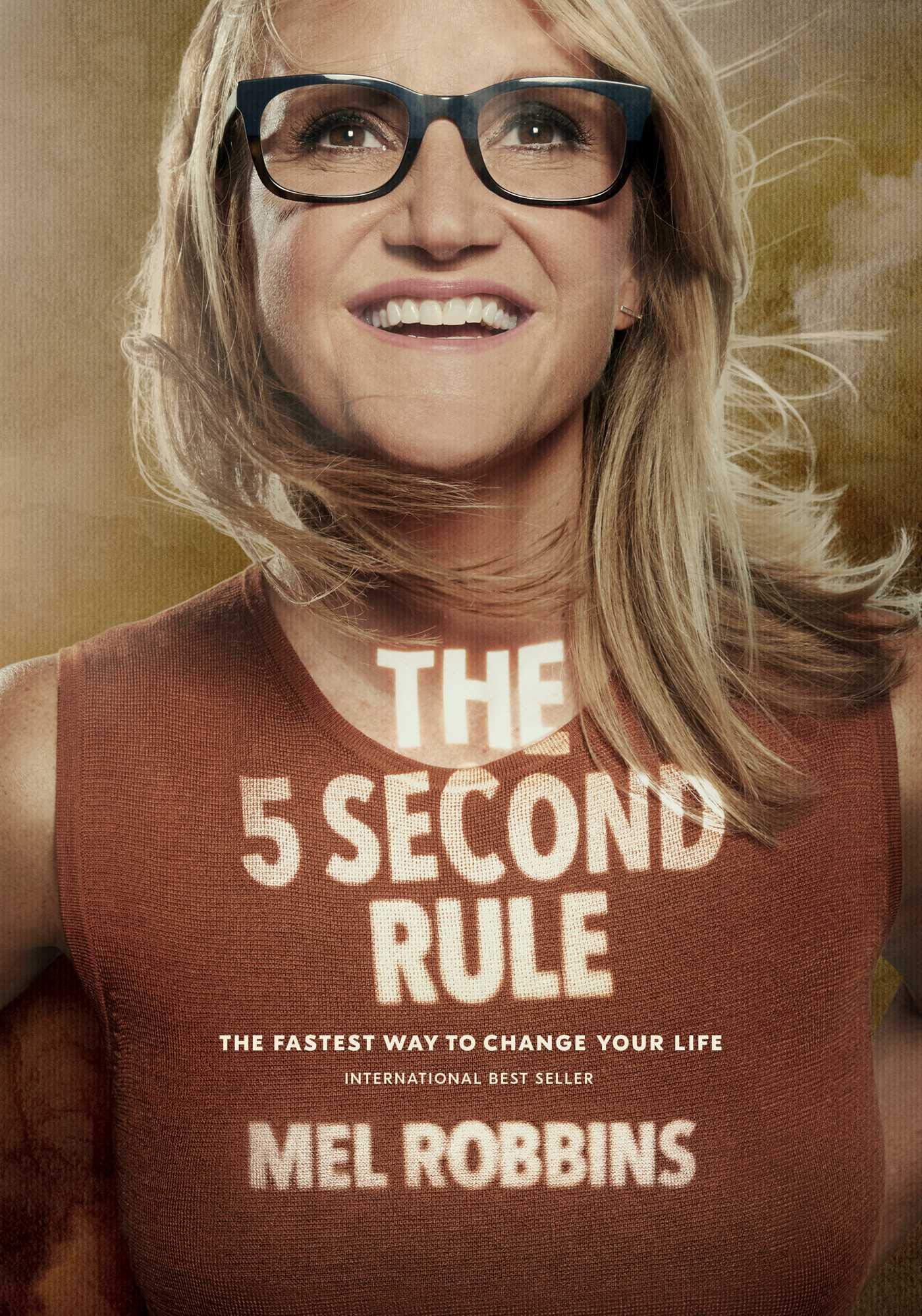
The 5 Second Rule
👤| Published | February 2017 |
| Genre | Self-Help / Productivity |
| Publisher | Savio Republic |
| Language | English |
| Core Concept | Metacognition / Cognitive Shifting |
📝My Honest Review: The 5 Second Rule
The premise of this book is famous: the moment you have an impulse to act on a goal, you must count 5-4-3-2-1-GO and physically move. If you don't, your brain will kill the idea. It’s designed to interrupt "analysis paralysis." Mel Robbins describes the moment she discovered it (while staring at a rocket launch on TV during a low point in her life):
"If you have an impulse to act on a goal, you must physically move within 5 seconds or your brain will kill the urge."
Now, for the critical take. This is a TED Talk stretched into a 200-page book. The actual "rule" takes about 30 seconds to explain. The rest of the book is filled with testimonials, social media screenshots, and repetitive examples. As a critic, I found the "filler" content a bit overwhelming. It feels like Robbins is trying very hard to convince you that the rule works, rather than providing new insights in every chapter.
However, the science behind it (metacognition) is actually solid. By counting backwards, you shift the gears in your brain from the "autopilot" basal ganglia to the "logical" prefrontal cortex. It’s a primitive but effective way to outsmart your own hesitation. It’s human, it’s messy, and for people struggling with depression or severe procrastination, it’s a legitimate lifeline.
⏱️ 1-Minute Summary (for busy readers)
The "5 Second Rule" is a simple tool to close the "knowledge-action gap." We all know what we should do, but we can't make ourselves do it. The rule acts as a "starting ritual" that breaks the habit of hesitation. By counting 5-4-3-2-1, you interrupt the brain’s habit of overthinking and "launch" yourself into action before your excuses take over.
The book explores how this rule can be used to beat procrastination, improve health, increase productivity, and even manage anxiety and panic attacks. It’s essentially a manual for building courage in small, five-second increments.
🔹 The Critic's Report Card
| ⭐ Rating | 3.5 / 5 A life-changing tool, but the book itself is a bit "fluffy." |
|---|---|
| 👍 What I Loved | The simplicity. There are no complex charts or 12-step programs. It's just a countdown. It works because it’s easy to remember when you’re stressed. |
| 👎 What I Didn’t Like | The padding. You could probably read the first 20 pages and get 90% of the value. The rest feels like a marketing brochure. |
| 😐 Overrated or Underrated? | Overrated as a book, Underrated as a habit. The concept is genius; the book is just okay. |
👤 Human Take: The Battle with the "Snooze" Button
The most "human" part of this book is the origin story. Mel Robbins wasn't a "success guru" when she found this; she was a 41-year-old unemployed woman with a struggling marriage and a drinking problem who couldn't even get out of bed. The rule wasn't born in a lab; it was born out of desperation. That makes it feel much more relatable than the usual "perfect" advice from billionaire CEOs.
The Final Word: If you struggle to get started on the things you know you need to do, this rule is a game-changer. You don't necessarily need to read every page of the book to benefit from it, but the core idea is one of the most practical productivity hacks ever created.
Discover Your Next Great Read
Handpicked recommendations from our collection of literary treasures




💬Discussions