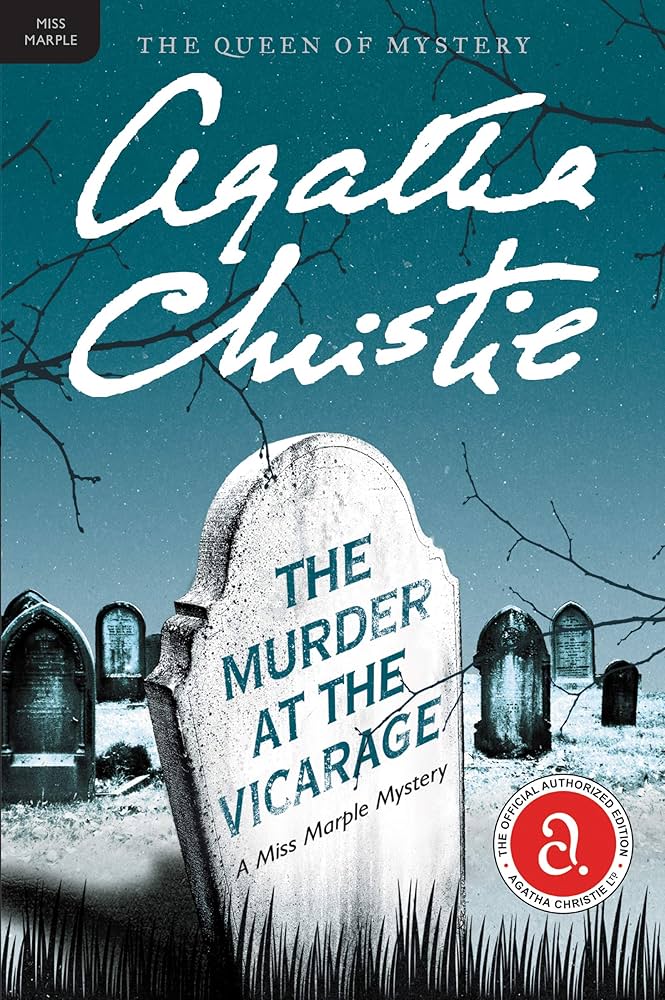
The Murder at the Vicarage
👤| Published | October 1930 |
| Genre | Detective Fiction, Cozy Mystery |
| Publisher | Collins Crime Club |
| Language | English |
| ISBN-10 | 0008196524 |
| ISBN-13 | 978-0008196523 |
📝My Honest Review: The Murder at the Vicarage
This book is the perfect "cozy" mystery. It takes place in the tiny English village of St. Mary Mead, where everyone knows everyone else’s business. What makes this one unique is that it’s narrated by the local Vicar, Leonard Clement, rather than a detective. His dry, slightly sarcastic voice makes the village gossip actually fun to read.
The victim, Colonel Protheroe, is so incredibly annoying and mean that even the Vicar says at the beginning, "Anyone who murdered Colonel Protheroe would be doing the world a service." It’s a great setup because almost the entire village has a reason to want him dead. However, because so many people confess to the crime, the police are completely confused.
Enter **Miss Marple**. In this first book, she’s a bit sharper and more "vinegary" than the sweet old lady she becomes in later novels. She’s like a human CCTV camera—she sees everything from her garden. I loved how she uses "village parallels" to solve the crime, comparing the suspects to people she knew years ago. It sounds like gossip, but it’s actually pure psychological genius.
The only downside is that the plot gets a bit tangled with timelines and clocks (a classic Christie trope), which can be hard to track if you aren't taking notes. But the final reveal is a total shocker that relies on a very clever bit of acting by the killers.
⏱️ 1-Minute Summary (for busy readers)
Colonel Protheroe, the most hated man in St. Mary Mead, is found shot dead in the Vicar’s study. The timing is impossible, as the Vicar was away on a fake call and his wife was out. Soon, two different people—the Colonel’s daughter’s lover (Lawrence Redding) and his own wife (Anne Protheroe)—both confess to the murder to "save" the other.
Miss Marple, watching from her garden nearby, notices seven things that don't make sense, including the timing of a gunshot and a mysterious suitcase. She eventually realizes the "confessions" were a brilliant trick. The two lovers were actually working together, using a fake "clock" alibi and a hidden silencer to kill the Colonel and then "confess" in a way that made them look innocent and noble to the police.
💡 Key Ideas & Themes
🌱 Life Lessons / Takeaways
- Human nature is the same everywhere: A crime in a palace and a crime in a village come from the same basic human flaws.
- Don't take things at face value: Just because someone confesses doesn't mean they are guilty—and just because someone looks "innocent" doesn't mean they are.
- Watch the "quiet" ones: The person sitting quietly in the corner (like Miss Marple) usually knows more than the people shouting in the center of the room.
🎯 Who Should Read This?
- Fans of *Murder, She Wrote* or *Father Brown*.
- Anyone who loves village gossip and "cozy" atmospheres.
- Readers who want to see where the legend of Miss Marple began.
❌ Who Shouldn't?
- Readers who want high-tech forensics or action-packed chases.
- Anyone who finds slow-paced "village life" descriptions boring.
🔹 My Honest Rating
| ⭐ Rating (Story, Writing, Value) | 4.5 / 5 A masterpiece of character-driven mystery. The village setting is perfectly realized. |
|---|---|
| 👍 What I Loved | The narrative voice of the Vicar. He is funny, relatable, and his frustrations with his parishioners make the book very human. |
| 👎 What I Didn’t Like | The climax feels a bit rushed. Miss Marple explains everything very quickly at the end, and I wish we saw her "process" a bit more during the middle. |
| 😐 Overrated or Underrated? | Underrated. People usually talk about *The Body in the Library* as the best Marple, but this debut is just as strong. |
| 🧠 What Changed My Thinking | It made me realize that "intuition" is actually just a very fast form of "pattern recognition" based on years of observing people. |
👤 Author Context (Behind the Scenes)
Why she wrote this book: After the success of Poirot, Christie wanted a different kind of detective. She based Miss Marple on her own step-grandmother’s friends—"E-flat old ladies" who expected the worst of everyone and were usually right.
Author’s mindset: This book was written during a stable time in Christie’s life after her second marriage. You can feel the warmth and humor in her descriptions of English country life, even when she’s writing about murder.
Reception: It was an immediate success. Readers loved the "armchair detective" style. It’s also notable because it’s one of the few times Christie uses a clergyman as the main narrator.
Discover Your Next Great Read
Handpicked recommendations from our collection of literary treasures









💬Discussions